Measles is one of the most contagious airborne diseases. The virus spreads through:
Inhaling respiratory droplets in a space where an infected person recently was
Touching contaminated surfaces and then touching your face
An infected person is contagious four days before and four days after the rash appears, meaning they can spread the virus before realizing they are sick.
In communities with low vaccination coverage, outbreaks can occur quickly. Up to 90% of unvaccinated people exposed to the virus will become infected.
Measles is one of the most contagious airborne diseases. The virus spreads through:
Inhaling respiratory droplets in a space where an infected person recently was
Touching contaminated surfaces and then touching your face
An infected person is contagious four days before and four days after the rash appears, meaning they can spread the virus before realizing they are sick.
In communities with low vaccination coverage, outbreaks can occur quickly. Up to 90% of unvaccinated people exposed to the virus will become infected.
Symptoms typically appear 7–14 days after exposure and may include:
High fever
Cough
Runny nose
Red, watery eyes (conjunctivitis)
Fatigue and body aches
A few days later, a red rash usually develops, starting on the face and spreading downward. Small white spots inside the mouth, known as Koplik spots, may appear before the rash.
Possible complications include:
Ear infections
Pneumonia
Encephalitis (brain swelling)
Severe diarrhea and dehydration
There is no specific antiviral medication for measles. Care focuses on relieving symptoms and supporting recovery.
Common treatment approaches include:
Rest
Staying hydrated
Fever-reducing medications such as acetaminophen (Tylenol)
Vitamin A supplements (particularly for children)
Hospitalization may be required if complications develop or for those with weakened immune systems.
If you suspect measles, contact a healthcare provider immediately to prevent further spread and ensure appropriate care.
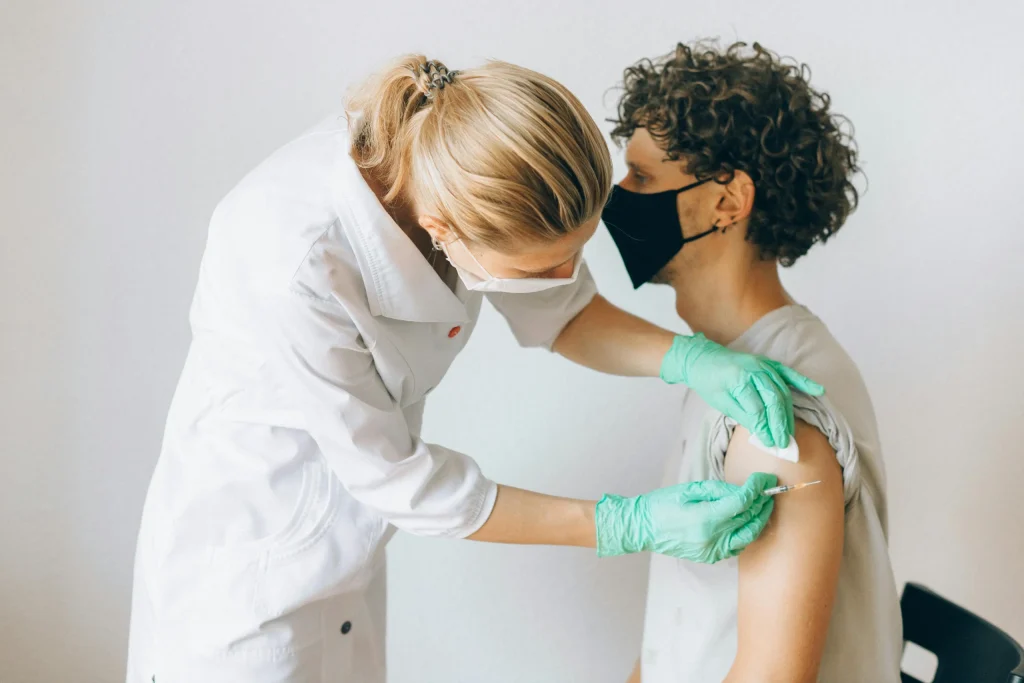
Vaccination is the most effective way to prevent measles. The MMR vaccine (measles, mumps, rubella) is safe and highly effective. It is recommended as:
First dose: 12–15 months
Second dose: 4–6 years
Additional ways to reduce risk include:
Avoiding close contact with anyone who may be infected
Washing hands frequently
Covering coughs and sneezes
Staying home if you are sick
If you’re unsure of your vaccination status, speak with your healthcare provider. Adults who have not been vaccinated or previously infected may still benefit from the MMR vaccine.
At Vernon Health, we’re committed to providing patient-centered, compassionate care wherever you are in your health journey. Explore our trusted providers and convenient locations to find the right support for you.